How Long Are License Plates Issued in Illinois?
If you own a vehicle in Illinois — or you’re planning to buy one — you may be wondering how long license plates are issued and how long they remain valid. This is an important topic not only for staying compliant with state laws but also for anyone using an Illinois license plate lookup owner tool to check vehicle records.
The answer is straightforward but often misunderstood: in Illinois, license plates themselves can last for many years, but their legal validity depends on annual registration renewal. Let’s break down exactly how the system works.
Who Issues License Plates in Illinois?
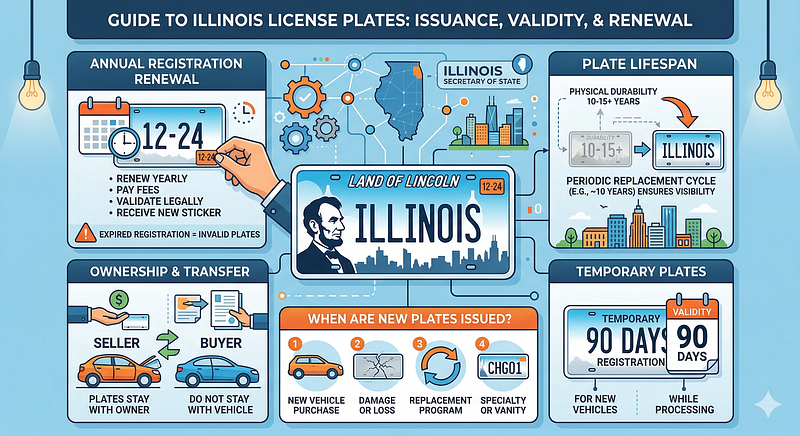
License plates in Illinois are issued and managed by the Illinois Secretary of State, which oversees vehicle registration, renewals, and plate replacements across the state.
When you register a vehicle for the first time, the state assigns a set of plates tied to that specific vehicle.
Do License Plates Expire in Illinois?
Here’s the key distinction:
License plates in Illinois do not typically expire physically — but the registration associated with them must be renewed every year.
This means:
- You usually keep the same plates for several years
- The plates remain on the vehicle long-term
- Annual renewal is required to keep them legally valid
If your registration expires, your plates are no longer valid — even though they are still physically attached to your car.
Annual Registration Renewal
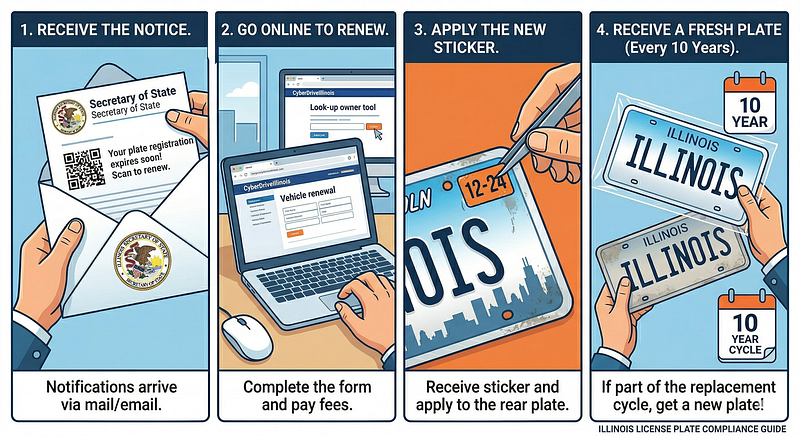
Illinois requires vehicle owners to renew their registration once per year.
What does renewal include?
Each year, you must:
- Pay registration fees
- Update your vehicle records
- Receive a new registration sticker
The sticker is placed on your rear license plate and indicates the expiration date of your registration.
What happens if you don’t renew?
Failing to renew your registration can lead to:
- Late fees and penalties
- Traffic citations
- Potential vehicle impoundment
From a records perspective, an expired plate may also show inactive status if someone performs an Illinois license plate lookup owner search.
How Long Do Temporary License Plates Last?
When you buy a vehicle — especially from a dealership — you may receive temporary plates while waiting for your permanent ones.
In Illinois, temporary registration permits typically:
- Last 90 days
- Allow legal driving while paperwork is processed
- Are issued by dealers or the state
Once your registration is finalized, your permanent plates will arrive by mail.
How Long Do Permanent Plates Last?
Illinois license plates are designed for long-term use. In most cases:
- Plates can last 10 years or more physically
- They remain assigned to the vehicle for extended periods
- They do not need frequent replacement
However, Illinois has implemented periodic plate replacement programs to ensure plates remain readable and reflective.
Illinois License Plate Replacement Cycle
Illinois has introduced a plate replacement cycle in recent years.
What does this mean?
- Plates may be replaced approximately every 10 years
- Replacement ensures visibility and law enforcement readability
- New plates are typically issued automatically during renewal
You may receive a notice when it’s time to replace your plates, along with updated registration materials.
When Are New Plates Issued?
Even though plates last a long time, there are situations where new ones are issued:
1. New Vehicle Purchase
You’ll receive new plates when registering a newly purchased vehicle (unless transferring eligible plates).
2. Plate Damage or Loss
If your plates are:
- Lost
- Stolen
- Illegible
You must request replacements through the state.
3. Plate Replacement Program
As mentioned, Illinois may issue new plates as part of its periodic replacement cycle.
4. Personalized or Specialty Plates
Custom plates are newly manufactured when ordered.
Do Plates Stay With the Vehicle?
In Illinois, license plates generally stay with the owner, not the vehicle.
This is different from some other states.
When a vehicle is sold:
- The seller typically removes the plates
- The buyer must obtain their own plates or transfer existing ones
- The vehicle is registered under the new owner with new plate details
Exceptions:
- Some plate transfers are allowed between vehicles owned by the same individual
- Specialty plates may follow specific transfer rules
Specialty and Vanity Plates in Illinois
Illinois offers a wide range of specialty plates, including:
- Military service plates
- University plates
- Organizational and charity plates
These plates:
- Require annual renewal
- May include additional fees
- Follow the same replacement cycle as standard plates
Vanity (personalized) plates remain active as long as:
- Registration is current
- Applicable renewal fees are paid
If not renewed, the custom plate combination may eventually become available to others.
What Happens If Registration Expires?
Your license plates become invalid if the registration is not renewed.
Possible consequences:
- Traffic tickets
- Fines and late penalties
- Increased renewal costs
- Legal issues if driving with expired plates
Additionally, expired registration can show up in public or third-party databases. Anyone using an Illinois license plate lookup owner service may see that the plate is no longer active.
How to Check License Plate Status
If you want to verify the status of a plate or research a vehicle, you can:
- Use official state resources
- Access third-party lookup tools
For a quick and easy option, you can check here:
???? https://illicenseplate.com/
These services can help you:
- Confirm registration status
- Review vehicle details
- Access publicly available ownership-related data (within legal limits)
How Long Do Illinois Plates Physically Last?
Illinois plates are made from durable materials designed to handle various weather conditions, including snow, rain, and heat.
On average:
- Plates can last 10–15 years or more
However, wear and tear can affect readability over time.
Common causes of damage:
- Fading due to sunlight
- Rust or corrosion
- Scratches or dents
If your plate becomes difficult to read, it’s important to replace it — even if it hasn’t reached the replacement cycle.
Do You Need to Replace Old Plates?
You may need to replace your plates if:
- They are damaged or unreadable
- They’ve reached the replacement cycle
- They are lost or stolen
- You choose to upgrade to a specialty plate
Replacement requests are handled through the Illinois Secretary of State.
Key Takeaways
Here’s a quick summary of how long license plates are issued in Illinois:
- Plates are issued for long-term use and do not expire physically
- Registration must be renewed annually
- Temporary plates last about 90 days
- Plates may be replaced every 10 years under state programs
- Plates generally stay with the owner, not the vehicle
- Replacement is required if plates are damaged, lost, or outdated
Final Thoughts
Illinois follows a practical system when it comes to license plate issuance. While the plates themselves are built to last for many years, their legal validity depends entirely on keeping your registration up to date.
For vehicle owners, the most important responsibility is annual renewal — not replacing plates frequently. At the same time, periodic replacement programs ensure that plates remain visible and effective for identification.
Whether you’re registering a vehicle, maintaining compliance, or researching records through an Illinois license plate lookup owner tool, understanding these timelines helps you stay informed and avoid unnecessary issues on the road.